Stretching Watercolour Paper – how-to
August 4, 2020

 På Svenska
Stretching a paper means taking advantage of the fact that a wet paper is larger than a dry one. When you wet a paper, it swells, a large sheet can be several centimeters larger when wet. When the paper dries, it regains its original size.
You soak a paper and let it swell, then you attach it to a board with tape, you let it dry. Since the paper can not shrink (it is fixed with tape), it will be stretched.
A stretched paper is nice to paint on, bubbles only insignificantly when it gets wet, and it is completely flat when it dries. A big advantage is that you treated the surface with water, which is very good for the colors (Read about this here)

How to remove a finished painting from a board
Also read about how to remove a finished painting from a board. Then you will avoid all the worries that I understand this causes those who try without knowing how to do it.
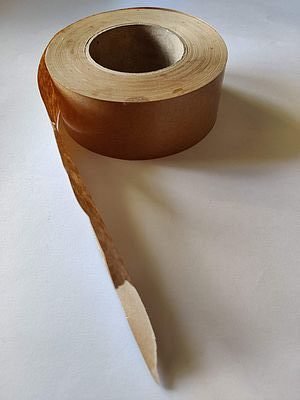
You need the following materials for stretching: Gummed Paper Tape (Read more), preferably brown which has more glue and is thicker than the white. A wide brush, at least as wide as the tape. A board that is larger than your watercolor paper.


This is how you do it
Step 1
Soak the paper. Let it soak in water for 10 minutes so that it swells properly.

Step 2
Pick up the paper, place it on your board. The wet paper is very sensitive, You should not touch the side of the paper that you will later paint on, neither with your fingers nor utensils, if you have placed the paper on the board, do not then turn it over, there are (probably) already small marks from the board on the paper
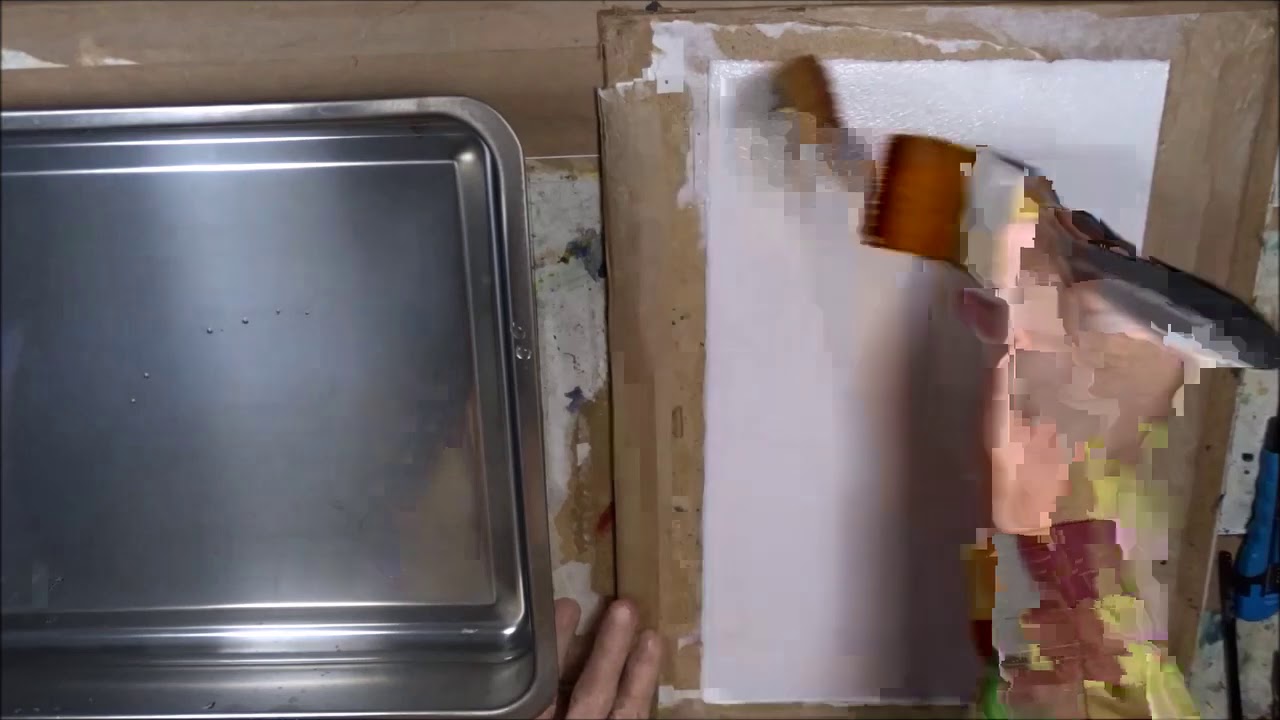
Then the paper surface should be treated. You do this by brushing the wet paper in all directions so that the sizing is evenly distributed. You should ABSOLUTELY NOT use a sponge for this, you should not remove the glue, just smooth it.
Step 3
Let the paper dry until the surface is no longer shiny. The tape sticks better on a slightly dry paper than on a very wet one. Alternatively, you can wipe approx. a half inch (1 cm) strip around the paper with some cloth or paper towel. Just so that the paper tape has a slightly drier surface to attach on.
Step 4
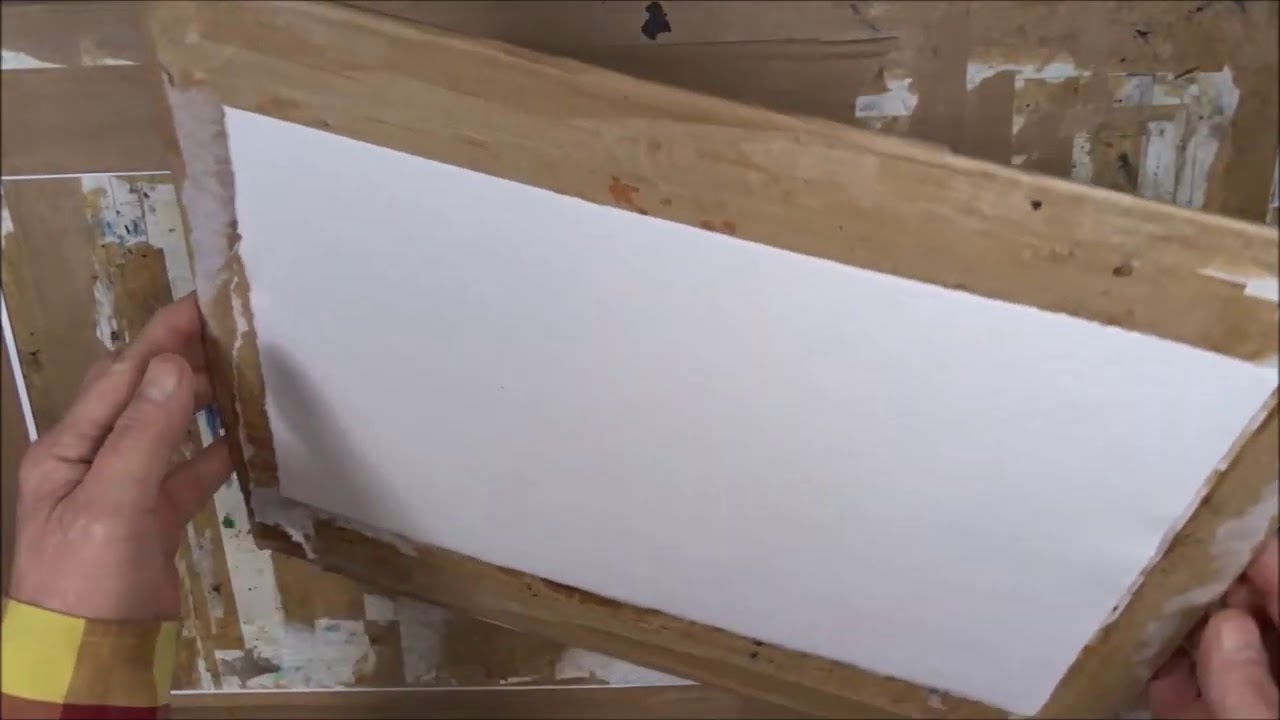
It’s time to attach the paper to the board. Bring out water and a brush, tear off a piece of tape that is long enough (a little too long or a little too short does not matter). Wet the tape on the sticky side with the brush. Preferably with one brushstroke, do not repeat with several brushstrokes, there will be too much water on the tape. NEVER wet the strip in a water tank or under the tap, in which case it does not stick well, do not use a sponge for this, the glue on the strip should not be removed, it should only be activated.

Attach the wet tape to the paper, at least 1/2 inch (one cm) on the watercolor paper. If you attach less than 1/2 inch, you risk it coming loose, if you use more, you will waste watercolor paper. A really large piece of paper may need 1 inch. Continue with the other sides of the paper in the same way. Press firmly and the tape will stick better.

Let dry
The next day the paper is stretched, then you can paint on it. It is not possible to speed up this drying time with a hair dryer or by placing the paper in the sun, then it comes loose. Let it dry on its own with the board lying down, if you stand the board, the moisture will creep downwards and the paper risks coming off at the bottom.
If you prepare this long before you are going to paint, it may be a good idea to use a lacquered board, or to use some acid-free (wood-free) material. This is to prevent wood acid from entering the watercolor paper.



This is something I have really struggled with for quite some time. I bought a few 56×76 sheets of cotton paper from different manufacturers and divided them to about 8 pieces per sheet. I also bought the brown tape and a wide moddler, and found a large square container for the water. But what should I tape the paper to? I asked at IB Wahlström, they had no advice to give me so I bought a couple of A4 masonite “pannå”, usually used for oil or acrylic and taped the paper to them. When the paper dried, the “pannå” bent. I tried with smaller pieces of paper, smaller than A5. The “pannå” still bent. I watched lots of youtube clips, people seemed to use “pannå” and the advice was “alternate which side you tape the paper to, then it will bend both ways and it will even out over time”. I didn’t like that approach and rage quitted watercolour for some time, I must admit to my shame. Then I decided it’s ok to use blocks until I’ve solved this problem in a satisfactory way. I have bought some plywood, which I’m planning to try after I’ve painted them so the wood won’t absorb so much water. I’ve also bought a piece of MDF, which seems quite sturdy. My questions are: Is there something better than MDF to tape the paper to? Should I paint the MDF to protect it from water? Is it a good idea to paint the plywood? Would the plywood work to tape the paper to? If I hade painted the masonite “pannå” to protect it from water, would it still have bent?
Any type of wood board will work (except masonite – which is useless), plywood is best I think. 5 mm thick, if you don’t want the board to bend. A bent board can straighten itself out if you stretch on the other side next time.
Treating the board’s surface doesn’t help, it’s not the moisture that bends the board, it’s the paper shrinking that makes the board bend.
Thanks! Masonite is useless indeed. I will try stretching one paper on a 5 mm plywood and one on a 10 mm MDF, without treating them, and see what happens. If something goes horribly wrong I will write a report in this thread and ask for more advice.