
Gamboge, a closed chapter
August 12, 2020
 På Svenska
Once upon a time there was a color, extracted from the tree Clusiaceae, which was called gamboge. Unfortunately, the paint had poor lightfastness, it faded quickly in sunlight. Therefore, it was replaced as soon as a more durable color was invented, the replacement was cobalt yellow – aureolin (1848), consequently the color gamboge could have fallen into oblivion. But watercolor painters loved it because of its golden hue and high transparency. Therefore, the paint survived as a watercolor paint.
Later “new gamboge” appeared in the color charts, the color tried to mimic gamboge but with better lightfastness, it was made of all sorts of AZO pigments.
Transparency
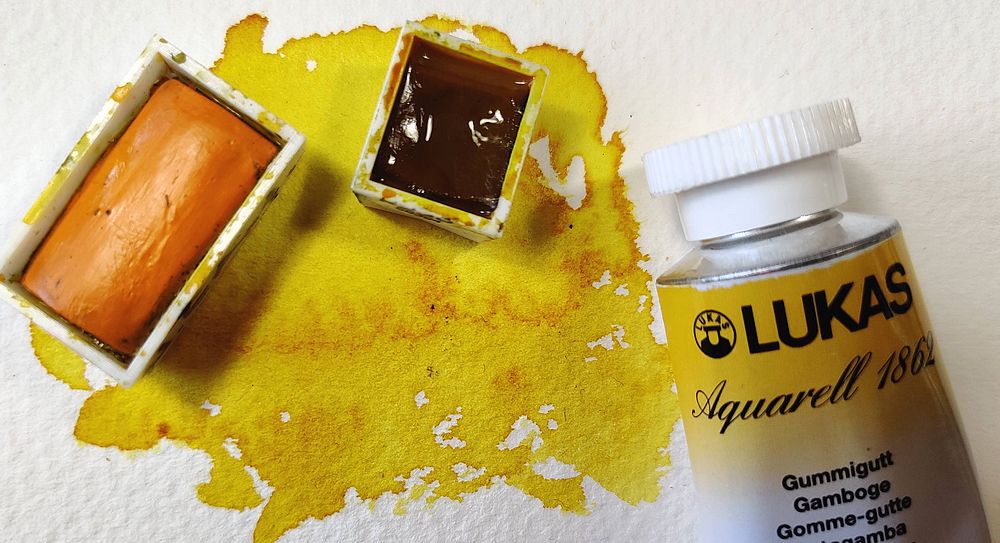
The small pan is genuine gamboge, it is so transparent that it looks brown, the large pan is WINSOR & NEWTON New Gamboge PY 153. The color sample in the background is painted with genuine gamboge
Eventually, the paint manufacturers stopped supplying genuine gamboge, all switching to the new gamboge. Winsor & Newton lasted the longest but shut down production in 2005.
1963 was the year when the synthetic pigment Nickel Dioxin yellow (PY153) was invented, it had almost all the properties of genuine gamboge: almost the same hue, almost transparent, and it was lightfast. Soon, all paint manufacturers made their “new gamboge” from PY153, but the pigment industry ended production in 2012. so now the paint manufacturers had to come up with a new recipe for the paint.
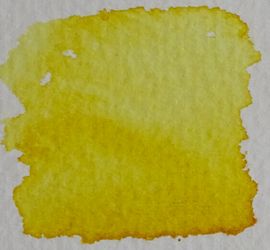
Notice the edges, only a transparent color can create these nice hard edges.

Slightly flat color with a beautiful hue

Has character and transparency but not like the original
All color makers nowadays mix the color of several different pigments: warm and cold yellow, even orange and red can be included. Some come close to the original while others are far from it. Everyone has the same problem: Transparency, because almost all yellow colors are more or less opaque, (there are a few transparent yellow colors, but they are not the correct hue for Gamboge) so the results are not very transparent, Some have succeeded quite well , though.
Some examples:
- WINSOR & NEWTON: Transparent Yellow (Nickel Azo yellow) (PY150) + A little red in the form of Quinacridone PR209)
- DANIEL SMITH: PY97 & PY110 Isoindoline (PY110 is one of the few transparent yellow pigments)
- M. GRAHAM: PY151, PO62, semi-transparent and reddish
- OLD HOLLAND: PY153, PY151
- TALENS : REMBRANDT: PY150 PO48 Dirty and semi-transparent
- LUKAS: still have PY153, if you like that color buy now before it disappears.
One should be aware that all so-called New Gamboge are just attempts to imitate a lost color, No one is genuine and all of them are different. If you find a favorite why not buy the two colors included in the mix and mix yourself, you get a much richer palette that way.

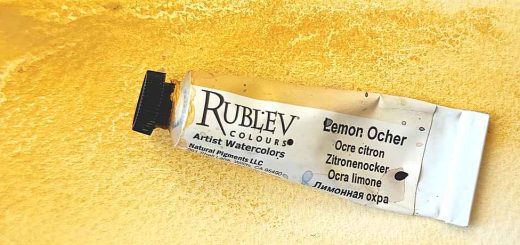


I found Lukas PY 153 online , here in the US. Interesting enough , the Lukas brand is more affordable than DS even though is manufactured in Germany. Do you recommend to buy Lukas besides the PY 153? DS isn’t a problem, really, but I’m just wondering. Tack
Personally, I only use Lukas when no one else has the color (there are only two). DS is a much better paint, unless the price difference is crucial for you, I would recommend DS.
Tack!
I have a Sennelier PY153, it is named Sennelier Yellow Light. It is presented as transparent but to me it looks like it has some opaqueness.
Here in U.S. I saw the 21ml tube at Dick Blick. Half-pans, 10ml and 21ml tubes online at Jackson Art (UK but they deliver extremely fast to US).
I checked the color and found they still use PY153. So the color is still obtainable. The transparency thing is a matter of relativity. Do the “black line” test, even my old colors with PY153 look opaque when I use them, but are quite transparent in mixes and when tested.
Gamboge is a great colour, whether artificial or organic, add a little cadmium red and you get an amazing orange, mix with cobalt blue and subtle but powerful green appears.
Very interesting article!
I just found a lot of W&N, genuine gambone NY24, and new gamboge PY153. Others in the lot don’t have the pigment on the label, but they appear to be made in the 70s or 80s. Are those made of PY153?
Do you think I should be concerned about the lightfastness of NY24?
Congratulations on your bargain!
A new gamboge from W&N that was manufactured in the 1970s may use PY153, the same color from the 1980s is probably PY153. Hard to get information about this.
NY24 has extremely poor lightfastness. Visible fading when exposed to direct sunlight occurs after just a few weeks. The fading is obvious after one or two months and after 6 months thin layers may have completely disappeared.
Thank you for your reply and congratulations for your thoughtful article!