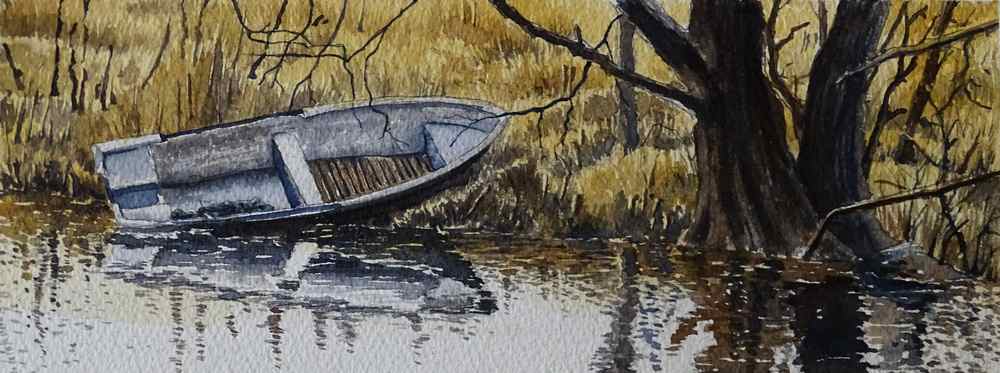
Rowing boat
This painting was made using one of my favourite colour triads: French Ultramarine, Burnt Sienna and Raw Sienna. Earth colours can easily be substituted with similar colours. Burnt Sienna can be replaced with any…


Blog in English
This painting was made using one of my favourite colour triads: French Ultramarine, Burnt Sienna and Raw Sienna. Earth colours can easily be substituted with similar colours. Burnt Sienna can be replaced with any…
This is the second little quiz about watercolor paint. The questions are quite difficult (they should be on a site like this). A passing score is 6 out of 10 questions answered correctly.
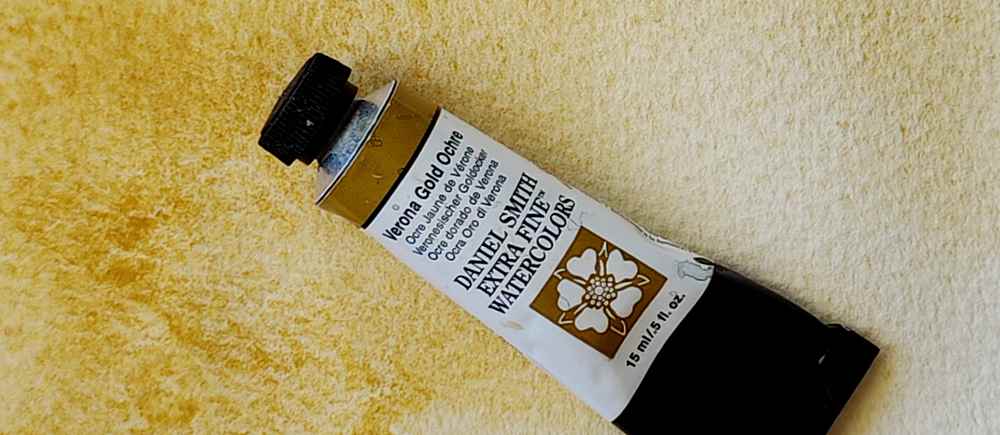
Verona Gold Ochre is a yellow ochre from Italy. Daniel Smith is the manufacturer of the paint. They do not state exactly where they source the pigment, only that it comes from an area…
There was once a watercolour paper called Whatman. After several years of intermittent production, the paper was relaunched in 1983. But it did not last very long. Production of the paper was discontinued in…
Below is a summary of various watercolour papers and how they are manufactured. I have included all the papers I have written about on this blog, as well as some common and well-known papers…
Paper is a thin material consisting of interwoven plant fibres. Leaving aside earlier paper-like products, paper in the modern sense was invented in China about two thousand years ago. Early paper was made from…
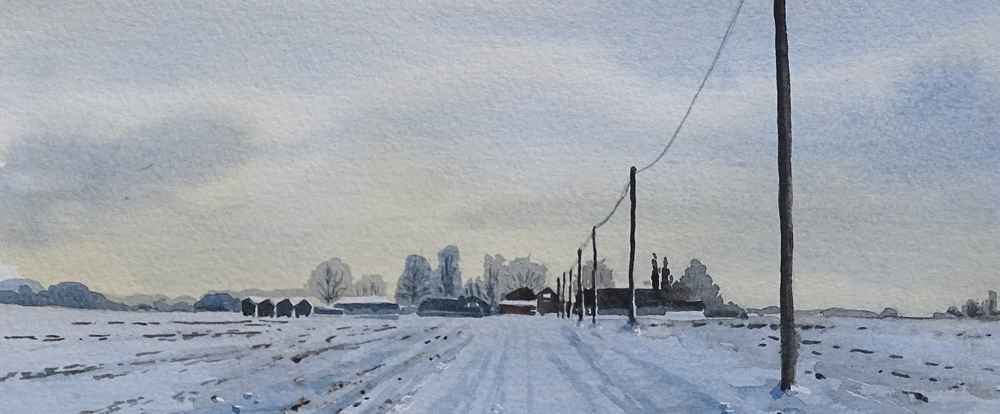
I avoid clouds whenever possible. I think they often steal attention from the actual subject. A sky is at its best when it does not dominate a painting. Dark skies and clouds can easily…
The original ultramarine pigment was made from the blue mineral lazurite, found in lapis lazuli, a semi-precious rock that has been mined in the mountains of northern Afghanistan for more than 6,000 years. The…
French Ultramarine is always French Ultramarine, isn’t it? And what about Aureolin, Viridian, and Cobalt Blue? Surely these classic colors are always what the label claims they are. Unfortunately, the name on the tube…