Phthalo blue (red shade)
This is an updated version of the text and images first written on August 5, 2020. It was discovered by accident in the 1920s and produced as a pigment in 1935, under the name…


This is an updated version of the text and images first written on August 5, 2020. It was discovered by accident in the 1920s and produced as a pigment in 1935, under the name…
In the late 18th century, an unknown potter invented a colorant that later became known as Potter’s Pink. The pigment is produced by calcining tin oxide together with various other oxides at high temperatures….
When I read my old articles about different watercolor paints, I often notice that they are unnecessarily sparse with information that could be both useful and interesting for readers. I therefore plan to rewrite…
It may sound strange to describe colours as orange-brown.The reason is to distinguish them from other brownish colours that lean toward yellow or red – those will be treated separately. There are so many…
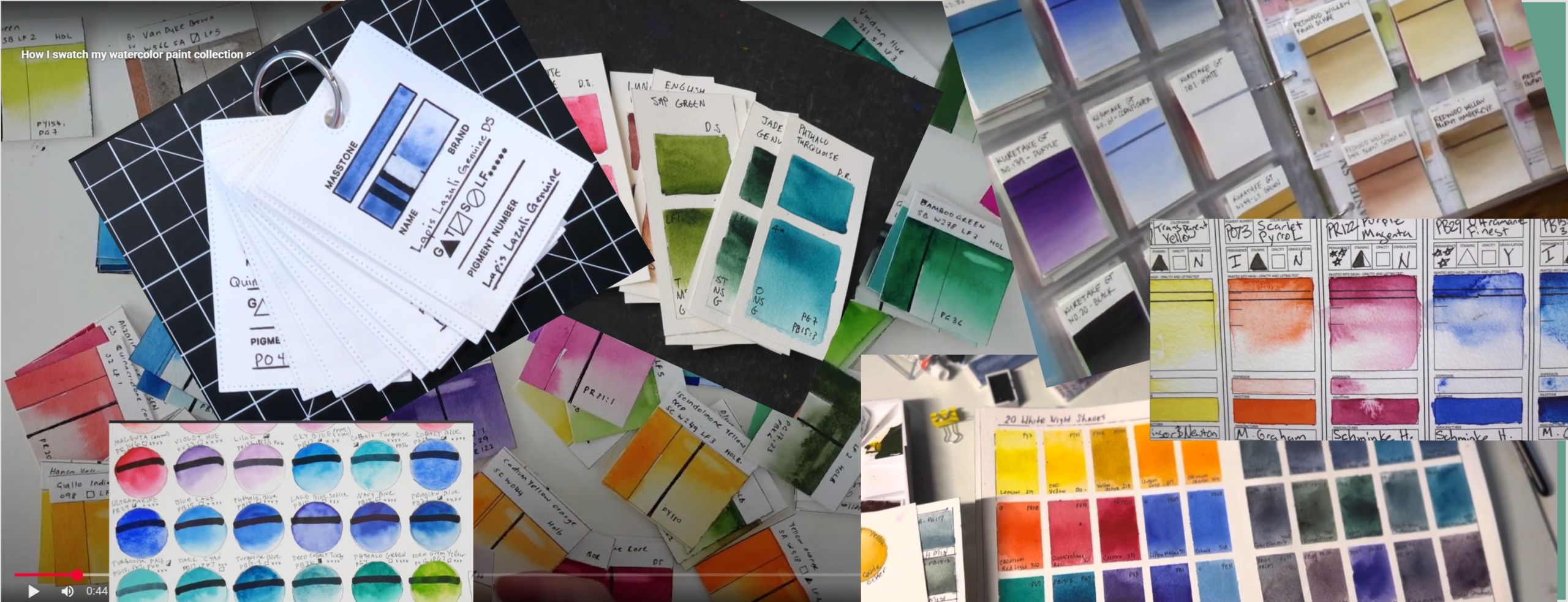
If you’re interested in watercolor painting and start looking for information on YouTube, chances are you’ll come across someone carefully painting watercolor in small squares. As far as I know, there’s no real term…
When using granulating colors in a painting and wanting to emphasize the patterns these pigments create, you can’t paint in the usual way. You need to create an environment that these colors enjoy “bathing”…
Natural Vermilion Vermilion, or as the color is called in Swedish and German: Cinnober (Zinnober), is no longer a watercolor pigment – today it is just a name for an orange-red made from various…
Some earth colors occur in both burnt and raw forms. This applies mainly to siennas and umbers, which often have these designations added to their names. Occasionally, other earth colors may also have such…
Benzimidazolone Brown is a very popular ingredient in many mixed paints, but as a standalone pigment in watercolor, it is not as commonly used. This is a bit unfortunate because it’s a very pleasant…