
Venetian red
September 16, 2020
 På Svenska
The color Venetian red is the same as Indian red, the only difference is that Venetian red is often slightly lighter and more orange in color. The color is as old as human culture, Venetian red is a kind of ocher, found on cave paintings that are 75,000 years old.
The original color Venetian red was thus an earth color, a red ocher with an iron oxide content of at least 20%. Venetian red could also be made from the pigment from the mineral hematite, also that of iron oxide. The original pigment thus consisted of natural iron oxide.

Other names for the same, or at least similar pigments are: English red, Indian Red, Italian red, Prussian red, Pompeian red and caput mortuum, several other names also occur. All are made of iron oxide and are collectively called iron red colors.
In classical painting, Venetian red is perhaps the most common of all colors. The pigment has many advantages, it is common and cheap, it is not toxic and it is extremely durable, it often has a beautiful brick red hue. Mixed with white, it forms the basis for skin tones in older, and contemporary painting.
Virtually all manufacturers nowadays use synthetic iron oxide (PR101). The synthetic iron oxide pigment is usually called mars red. The genuine colors are hard to come by. Daniel Smith has some and you can find several different at: www.naturalpigments.com/
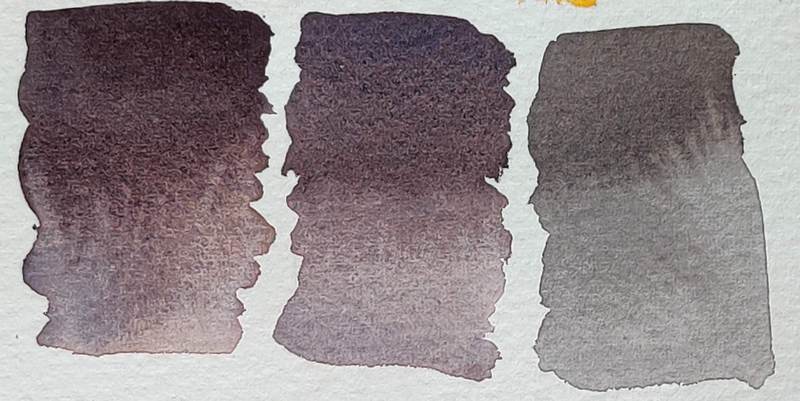
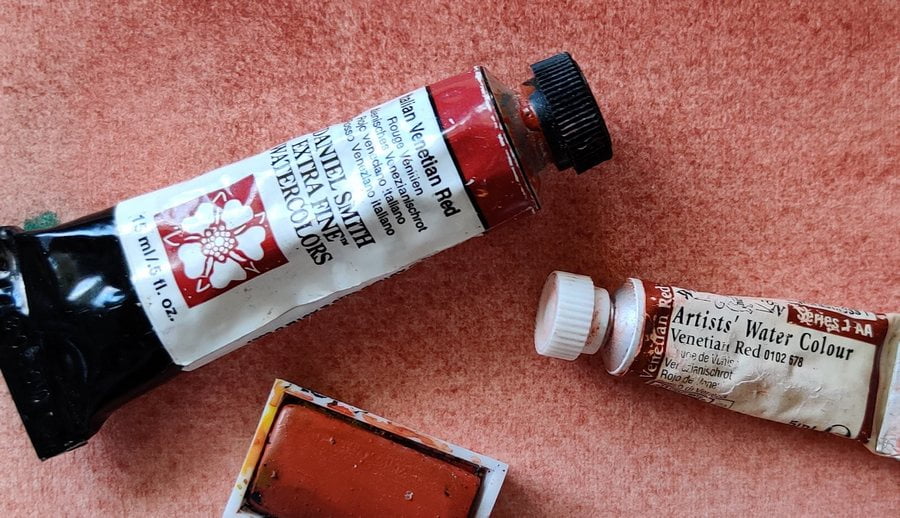
Unfortunately for the watercolorist, many modern iron reds are opaque or very opaque. They all give a flat impression and have limitations when it comes to mixing with other colors. Personally, I have a bit of a hard time with those types of colors. I avoid Venetian red or other opaque iron reds. There are a few exceptions, such as Italian Venetian Red, which is made by Daniel Smith. It is semi-transparent and granulates, a nice color. Otherwise, I don’t like the various synthetic iron reds, they are too opaque and bland in my opinion.
Characteristics

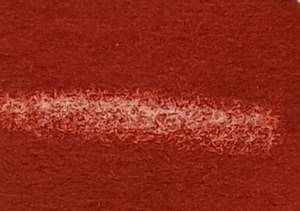
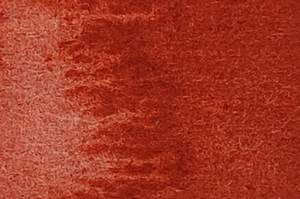

Color index name: PR101.
Lightfastness: Excellent
Transparency: Opaque.
Staining: Slightly.
Granulation: just a little.