Stop Rubbing
November 20, 2025

 På Svenska
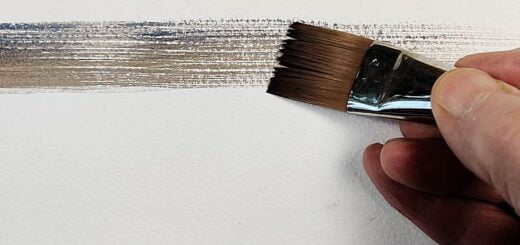
Since many of my students – both beginners and those who have painted for years – tend to rub watercolor paint onto the paper, I assume this is quite a common habit. By “rubbing” the paint, I mean painting with an almost dry brush and continuing even when the paint has stopped flowing. Instead of letting the paint glide onto the paper, they scrub out the last bit until the brush is completely empty – then they reload it with fresh paint.
That approach might work with house paint (although professionals use a more fluid technique there as well), but for watercolor it is disastrous.
I see this all the time. I often say “paint fluidly,” and the student replies, “but I am!”. Clearly, our understanding of what “fluidly” means is different.
By fluidly, I mean using a well-loaded brush and applying the paint with clear, deliberate brushstrokes that are not repeated on the same area. You must reload the brush as soon as it can’t deliver enough paint anymore – which is quite often.
To make the result even worse, it’s common that the student first paints a contour around the area and then rubs the color inside. That kills the watercolor: it becomes dull, opaque and lifeless.
The videos below show two different methods. The first one: a very common approach – too little paint, uneven surface, and then “smoothing it out,” which only makes it worse. In the second video, I show how I think one should paint an area: once, with plenty of paint.
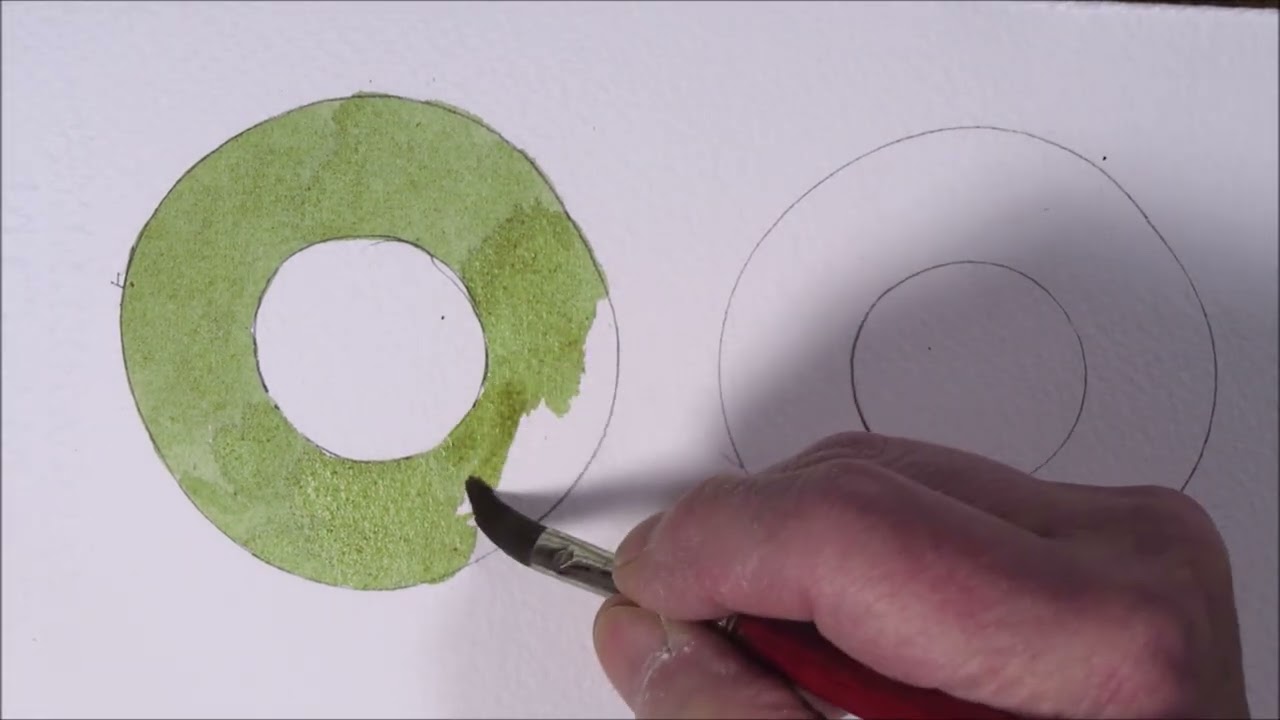
By rubbing the paint in place with constant overpainting, the result becomes blotchy and ugly, without the luster that is otherwise natural to watercolor.


With fluid painting, the natural brilliance of watercolor paint emerges and even with opaque paint, the painted surface takes on a beautiful luster.

When the painting is almost finished but doesn’t look the way the artist intended, the real execution of the artwork begins: the repairs. Too dark in one spot? – Rub some off. Something should be redder? – Paint over with red. A pole in the background is crooked? – Rub it away and make a new one. An unwanted bloom appears? – Try to cover it with more paint…
The picture below shows a few watercolors where the artists used too little paint and then rubbed on additional layers. The result isn’t just patchy – the paint dies. It becomes heavy and opaque, losing the glow and elegance that a fluid watercolor wash can offer.

There are only two moments when you can apply more paint to an already painted area: while it’s completely wet or once it’s completely dry. All in-between stages – when the paint is half-dry – should be avoided. That’s when blotches, blooms, and other unwanted effects appear.
Therefore – if you want to achieve beautiful watercolor washes:
• Paint with a fully loaded brush. Reload often — it should never get dry.
• Don’t paint over a previously painted area until it is entirely dry, or immediately while still wet.
• Don’t try to repair things — it usually ends badly.
• Get it right the first time — or accept the mistake. Fixing afterward rarely works.