
Make a bubbly watercolor Painting flat
September 11, 2025
 På Svenska
When you paint on a loose sheet of paper, and sometimes even in a block, the result can never be framed properly with a mat. The reason is that the mat will reveal every little unevenness in the watercolor—it’s not attractive to have small gaps between the mat and the painting. Even with other ways of framing, a wrinkled watercolor doesn’t look good.
So what do you do when you have a beautiful painting that has buckled? In my opinion, the best way to make a wrinkled watercolor flat again is to stretch it with moisture.

There are alternatives to stretching. Another classic method is to dampen the paper until it becomes soft, then place it between boards that allow moisture to pass through. Press the boards together until the paper is dry, which takes a long time—probably several days. You can also iron the paper with a steam iron. It never turns out perfect, only almost. Keep in mind that some paints don’t react well to heat.
The simplest and best way, however, is to stretch. The result is completely flat, it only takes a few hours of drying time, and it becomes easy once you’ve tried it a few times. If you already have the habit of stretching your watercolor paper, it’s easy to transfer that knowledge to a finished painting.
Wet the Back
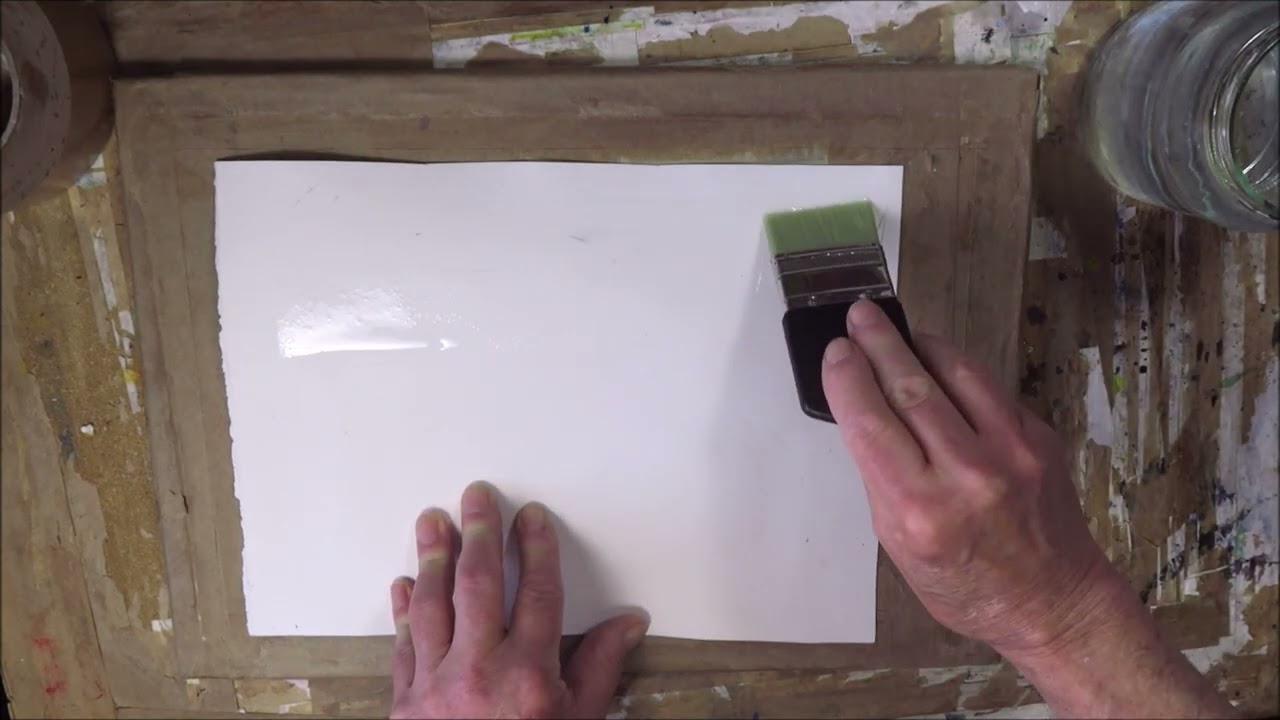
Start by brushing water onto the back of the watercolor. Use plenty of water. The idea is to make the paper swell, so be generous. Avoid brushing water over the edges of the sheet—if you do, water might run onto the painting. Leave about a one-centimeter dry border all around the edge. Feel free to dab on a little extra water once the back is fully covered. I know some artists say you should put a towel underneath to absorb excess water. But I find it simpler without—I’m showing you how I do it, not how others do.
More Water
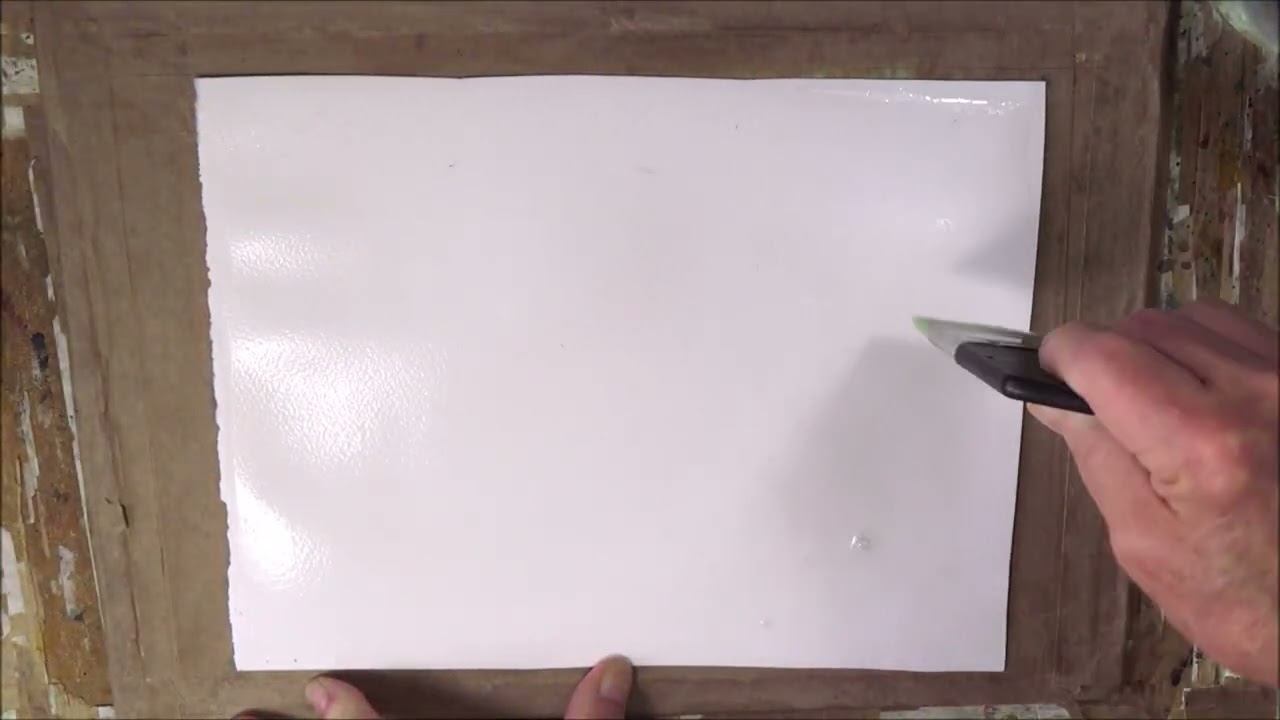
After a while (maybe 10 minutes), when the paper has absorbed the water, you should wet it again so that the paper is really soaked. Help the water flow evenly by tilting the sheet in different directions so it spreads across the surface. Don’t let it run over the edge. Feel the paper—it should have lost its stiffness and become a bit soft. If needed, wet it a third time.
Gummed Tape
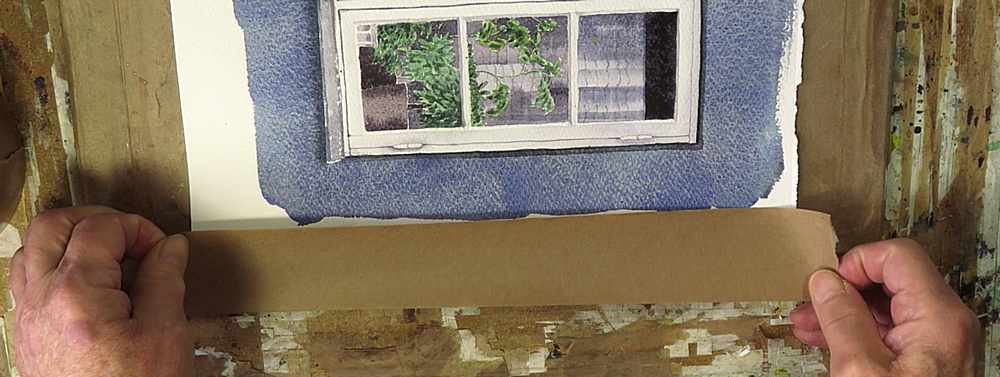
After a while, the paper will have expanded. Before turning it over, brush across the back to distribute the moisture evenly. Then turn the watercolor face-up and tape it to the board with gummed paper tape. You cannot use any other type of tape—it must be able to withstand the strong forces created as the wet paper dries and shrinks. Once all the sides are taped down, all you need to do is wait until the watercolor is dry. Ideally, wait until the next day before removing the paper from the board.
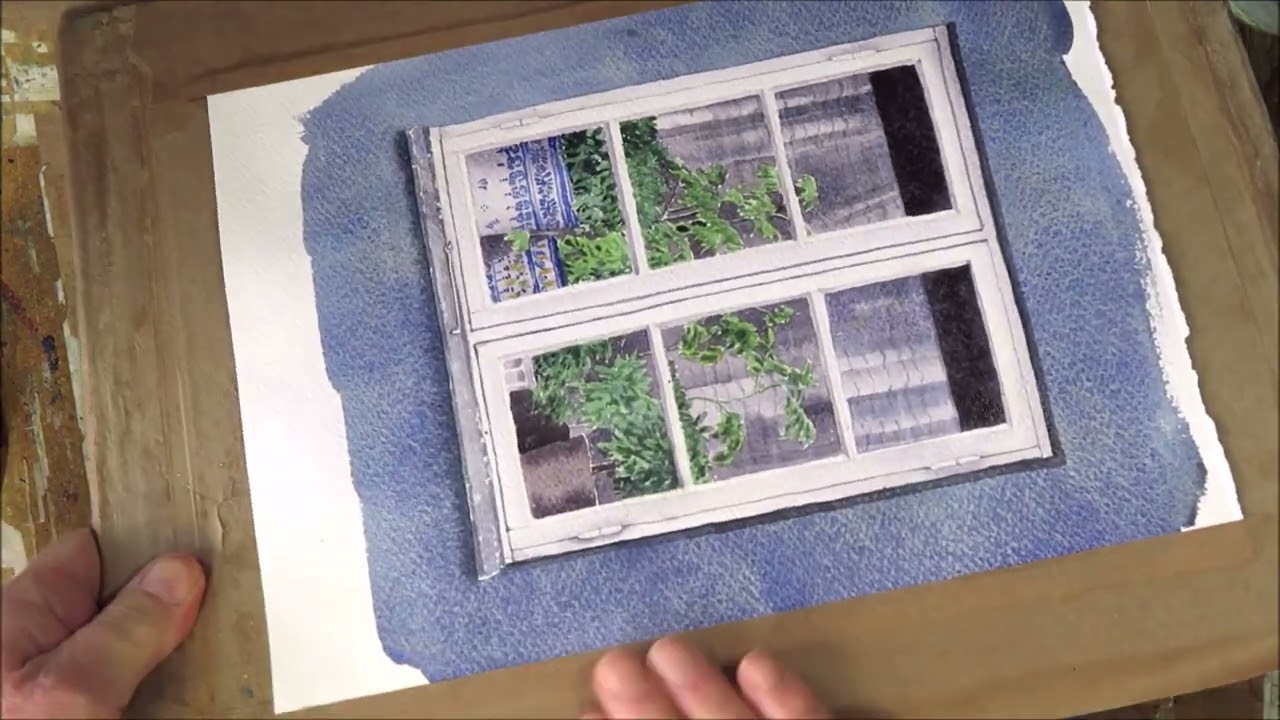
Some parts of a painting with a lot of pigment—very dark areas—may dissolve slightly when the moisture seeps through the paper. Therefore, avoid moving the sheet so that the paint doesn’t smear if it gets damp. Personally, I’ve never had any problem with smudging, but I still want to warn of the possibility.
Cut Free a Flat Watercolor
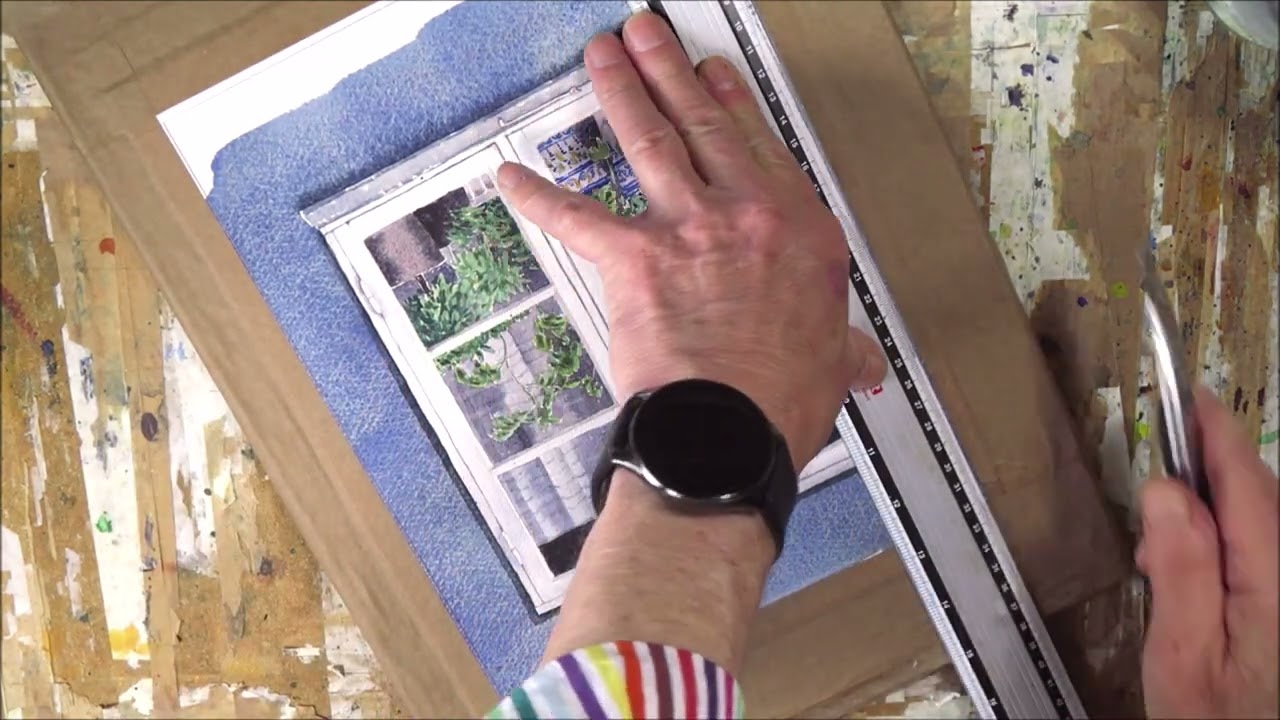
Release the dry, flat watercolor by cutting carefully around the painting with a sharp knife. The result is a completely flat artwork—a stretched watercolor is even flatter than unused watercolor paper. Now you can frame your painting and be proud of your excellent craftsmanship.


Mycket bra sida om akvarell. Lustigt att du skriver om IKEAs barnpenslar. Jag köpte dessa till mina deltagare på akvarellkurser och de fungerar utmärkt att måla akvarell med. Saunders x-tra white 425 gram fine gräng är mitt favoritpapper.