New Sizing and new methods
February 9, 2026

 På Svenska
Three Changes in the Surface Sizing of Watercolour Paper
Over the many years I have worked with watercolour, I have noticed three changes in the surface sizing of watercolour paper:
These changes have taken place gradually over a period of roughly thirty years. From the mid-1990s onward, the sizing process has slowly but steadily evolved.
Gelatin Sizing
It is becoming increasingly common for high-quality watercolour papers to be sized with synthetic or plant-based agents. Nevertheless, traditionally gelatin-sized papers still form the majority. In the past, animal gelatin was used that was not particularly refined and could contain various residual by-products. When such sizing was wetted, it could emit an unpleasant odour. The gelatin could also contain pesticides and preservatives, which further contributed to the smell.
Over the past decade or so, this odour has largely disappeared. Modern watercolour paper no longer smells sour or unpleasant. Stricter EU regulations can be credited for this development to some extent. Tighter rules concerning odour, hygiene, allergens, and working conditions have forced manufacturers to adopt cleaner processes. More highly refined gelatin products have reduced odour issues, and many mills have transitioned to enzyme-treated gelatin or blended gelatins that are effectively odour-neutral.
Today, one can paint watercolour without being enveloped in a cloud of disagreeable fumes. Admittedly, watercolour paper never smelled quite that bad in the past—but it is certainly a relief that watercolour painting is now free from unpleasant odours.
An Even Painting Surface
In earlier times, it was considered essential to pre-treat watercolour paper with water and allow it to dry before painting. The reason was to even out the sizing layer, which was often unevenly applied and could contain small air pockets. These resulted in paler passages and speckled, uneven colour surfaces.
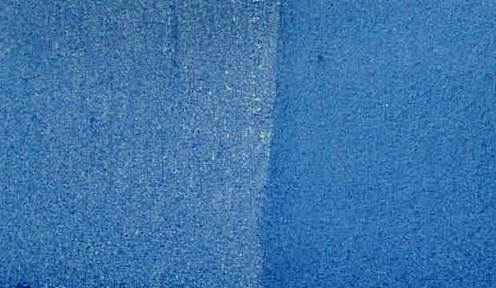
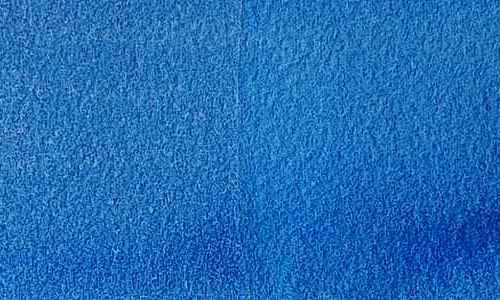
Surface sizing was previously applied through immersion baths or brushing with a relatively thick sizing solution. The process was sensitive to variations in temperature, viscosity, and speed. The result was a paper surface that produced dull or unpredictable results unless it had first been treated with water.
Today, sizing is applied with a level of precision that would once have been unimaginable. Digital measurement systems monitor the process, with the degree of sizing measured in microns and continuous control of moisture, drying time, and pH levels. The result is a paper with a highly uniform surface that allows for immediate painting, with far less need for pre-treatment.
Lack of Sizing
In the past, it could happen that a newly purchased sheet of watercolour paper was so poorly surface-sized that it was impossible to paint on. A paper without surface sizing behaves like blotting paper: the paint is instantly absorbed into the fibres, making watercolour painting virtually impossible. Certain brands were particularly prone to this defect.
This problem has affected both myself and my students on countless occasions—watercolour papers containing large areas that were completely unsized.
With modern manufacturing methods, this issue appears to have been largely resolved. In recent years, I have not encountered a single paper with unsized areas. The reason is the same as for the increased uniformity and reduced need for pre-treatment: modern, highly controlled methods of applying sizing.
Then and Now
There is no doubt that it is a success that modern watercolour paper can be used without pre-treatment, that it no longer smells, and that it no longer contains unsized areas. However, something has also been lost as a result of this increased precision.
Older watercolour papers had more personality. They possessed a degree of friction that has largely been replaced today by a smoother, more slippery feel. Granulating pigments could become extraordinarily lively, and colours would immediately take hold of the paper. Today, pigments often behave in a more restrained manner.
At the same time, the disadvantages of older papers were obvious. Even washes were not always even, sizing could be unevenly distributed, and the sizing itself could migrate as the paint dried.
Watercolour papers of the past were magnificent when everything worked—but deeply frustrating when the paper resisted the artist. Modern watercolour papers are predictable, evenly absorbent, and require far less preparation.
Perhaps older watercolour papers, with their unpredictability and more vibrant surfaces, are still preferable. Rather than acting as an active counterpart, paper today has become a neutral platform. Modern manufacturing methods and consumer demands have produced a paper that is easy to use, reliable, and consistent. What was sacrificed in the process was the lively surface—convenience took precedence over personality.



Wow, very interesting, thank you for sharing your knowledge!