
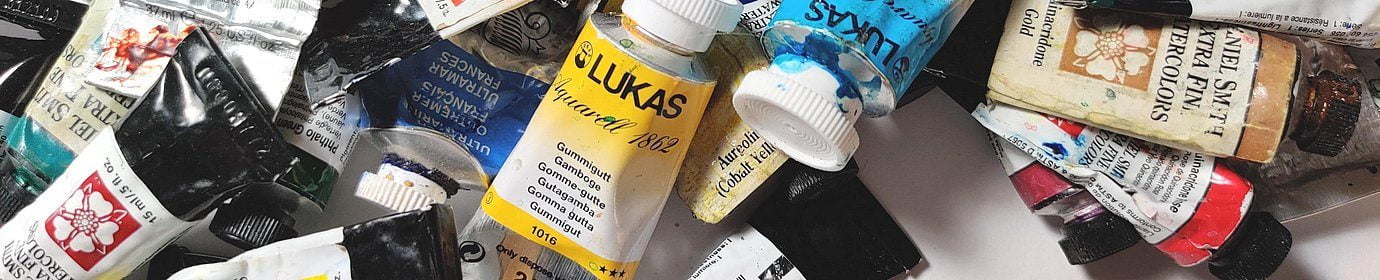
Benzimidazolone Carmine (PR176)
March 10, 2026

 På Svenska
Benzimidazolone Carmine (PR176) was introduced in 1960. Daniel Smith was the first to use PR176 in a paint they named Carmine. Other manufacturers followed over time. Today there are a handful of brands that offer Benzimidazolone Carmine as a watercolor.
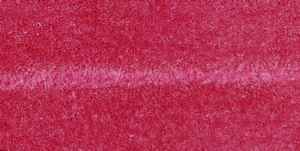
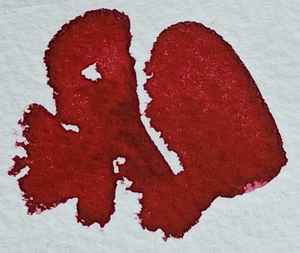
Benzimidazolone Carmine is a deep, intense cool red with a slightly blackish character. It is fairly transparent, staining, and easily produces blooms.
No paint manufacturer gives Benzimidazolone Carmine a sensible descriptive name. Instead, names are used that evoke traditional cool reds such as madder, alizarin, or carmine. It is also a rather uncommon pigment in watercolor paints and has mainly been used as a replacement for the fugitive pigments alizarin lake and carmine lake (cochineal lake).
Among the larger watercolor manufacturers, the pigment appears in the following colors:
- Daniel Smith – Carmine
- MaimeriBlu – Permanent Carmine
- Mijello – Rose Madder
- Roman Szmal – Permanent Alizarin Crimson
- Royal Talens Van Gogh – Carmine
- Daler Rowney Aquafine – Alizarin Crimson Hue
- Daler Rowney – Alizarin Crimson Hue
- Lukas – Alizarin Crimson

Right: Benzimidazolone Carmine
As you can see, all these colors are named something other than what they actually are. Daler Rowney at least has the good sense to add the word hue, indicating that the paint is not made with the original pigment. Other paint manufacturers might want to reconsider their naming practices. The paint you buy is not the one the name suggests; it may resemble the original, but it is not the same.
If you are fond of alizarin crimson but hesitant because of its poor lightfastness, Benzimidazolone Carmine can be an excellent substitute. The similarities between the two colors are striking.
- They are very similar in hue. Both are blackish, intensely cool reds. PR176 is slightly cooler than alizarin.
- Both are transparent, although alizarin is more transparent.
- Both perform well in wet-in-wet techniques. PR176 is slightly less responsive, while alizarin works better on very wet paper.
- Neither color granulates, but both leave a hard edge on the paper. Alizarin does this more strongly than PR176.
- Both colors produce blooms easily, although alizarin does so slightly more readily than PR176.
As a replacement for fugitive alizarin crimson, Benzimidazolone Carmine is almost perfect. The hue is very similar, and the other working properties are comparable as well. For anyone looking for a durable substitute for alizarin, Benzimidazolone Carmine may be the best choice.
When it comes to carmine, however, the comparison is largely irrelevant. The color has not been produced by any major paint manufacturer for about a hundred years. It disappeared from paint lists in the late nineteenth century and gradually vanished during the twentieth century. Today it is mainly used in food and cosmetics, where it is labeled E120 in Europe. (In the United States the color is still called carmine when used in food.)

One characteristic common among benzimidazolone pigments is their ability to produce drying patterns easily. Such patterns appear when materials such as plastic wrap, textiles, or salt are applied to a wet wash. Many pigments struggle to create clear patterns, but many benzimidazolone colors do so with ease—Benzimidazolone Carmine included.
The color appears distinctly cool red, almost pink, in thin washes. When used more concentrated, it appears noticeably warmer. The difference in hue between diluted and full-strength applications is therefore quite pronounced.
I have used Benzimidazolone Carmine instead of Quinacridone Rose in several paintings. It works reasonably well as a substitute for that primary red quinacridone color. However, it is not quite as clean in hue as Quinacridone Rose; it has a slightly blackish character and is less transparent. For that reason, it could be considered somewhat less versatile. The color is also very intense, which means it must be used with some restraint—It’s easy to get too much of it.




Properties
Color Index Name: PR176
Lightfastness: Very Good
Transparency: Transparent
Staining: Yes
Granulation: Non-granulating
Hue: Slightly blackish cool red




Det är ju en hel vetenskap bara med en röd färg,förstår inte hur man ska kunna sätta sig in i allt detta ens under en livstid