Transparency of watercolor paints

 På Svenska
Transparent watercolours allow light to pass through, which means the light from the white paper shines back through such a layer of paint. This is one of watercolour’s most characteristic properties, and when used correctly it can create a luminous quality in a painting. Opaque colours, by contrast, are covering: they form a layer of paint that hides the paper and any underpainting. Both transparent and opaque colours have their place in a watercolour palette—even though transparency is the hallmark of watercolour painting, opaque colours are also needed.
How well a paint is manufactured affects how transparent it is. The amount of additives also matters. But most of all, it is the pigment itself that determines transparency—some pigments are inherently opaque while others are transparent.
The transparency of a specific watercolour depends on the pigment it is made from, but also on which manufacturer produced it. Different manufacturers use different methods: some grind the pigment carefully with binder and other ingredients, sometimes in multiple passes, while others spend significantly less time and care on that process. Often you can see these quality differences reflected in the price. The grinding (milling) of watercolour pigment with binder, honey, and other additives is crucial for transparency and for the overall quality of the product.
Some manufacturers use fillers to extend the expensive pigment, which can affect transparency. That’s why the list below is only approximate. A particular colour may be transparent from one manufacturer, while a simpler production method might deliver a more opaque version of the same colour. Therefore, the list below should be seen only as a rough guide to the relative transparency of different colours.
The transparency of a watercolour has implications for painting technique. For example, it may not be wise to use opaque paints in a layer-on-layer (glazing) approach. Colour mixes usually work better with transparent paints, which don’t overpower as much and make mixing easier. But if you want to create a solid, even area of colour, an opaque paint is preferable. And sometimes you simply want to use a specific colour for its effect or beauty, regardless of whether it is opaque or transparent.
All watercolours made from multiple pigments are excluded from this list. The reason is that every manufacturer uses different recipes, combining different pigments to achieve a particular hue. As a result, such colours have varying properties even if they share the same name.
(If the list below looks crowded and becomes difficult to read on a mobile phone, turn your phone, and read it horizontally.)
Green
Yellow
Red
Violet
Earth
Black
Transparency of blue colours
| Transparent | Semi-transparent | Semi-opaque | Opaque | Colour sample |
|---|---|---|---|---|
| French Ultramarine PB29 |  | |||
| Cobalt Blue PB28 |  | |||
| Prussian blue (Iron blue) PB27 |  | |||
| Antwerp Blue PB27 | ||||
| Phthalo blue PB15 |   | |||
| Phthalo Turquois PB16 |  | |||
| Cerulean Blue PB35, PB36 |  | |||
| Indanthrone PB60 |  | |||
| Indigo (Genuine) NB1 |  | |||
| Mayan blue PB82 | 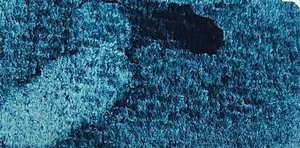 |
Transparency of green colours
| Transparent | Semi-transparent | Semi-opaque | Opaque | Colour sample |
|---|---|---|---|---|
| Phthal green (PG7 – PG36) |  | |||
| Cobalt Green, Teal, Turquoise (PG50) |   | |||
| Perylene green (PBk31) |  | |||
| Serpentine green | 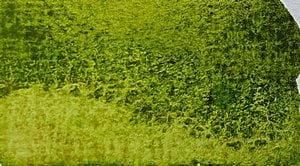 | |||
| Green Earth PG23 |  | |||
| Viridian PG18 |  | |||
| Chromium oxide green PG17 | ||||
| Diopside Genuine |  | |||
| Green Apatite Genuine | 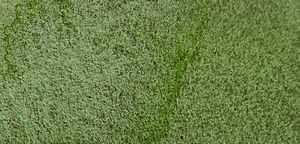 |
Transparency of yellow colours
Azo pigments, sometimes called Hansa colors are a large collection of synthetic modern pigments that are sometimes called something with Hansa or Azo, but are often given fantasy names. The transparency varies, but they are usually between semi-transparent to semi-opaque, which is why they ended up in two different columns.
| Transparent | Semi-transparent | Semi-opaque | Opaque | Colour sample |
|---|---|---|---|---|
| Aureolin (Cobalt Yellow) (PY40) | 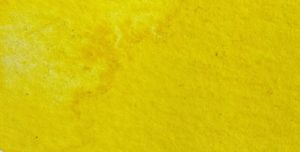 | |||
| Cadmium yellow colors | ||||
| Green Gold (PY129) | 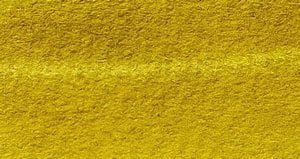 | |||
| Nickel Titanium yellow (PY53) | ||||
| Isoindoline Yellow (PY139) |  | |||
| Azo or Hansa yellow colors | Azo or Hansa yellow colors | |||
| Isoindolinone Yellow (PY110) |  | |||
| Lemon yellow (PY175) |  | |||
| Mayan Yellow (PY223) |  | |||
| Nickel Azo yellow (PY150) | 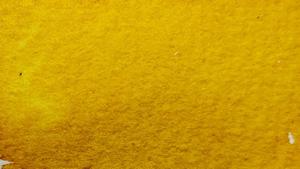 | |||
| Chrome Antimony Titanate (PBr24) Incorrectly called Naples Yellow | 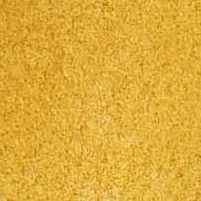 | |||
| Lemon Ocher (PY43) | 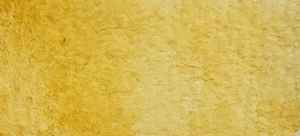 |
Transparency of red colours
Azo pigments, sometimes called Hansa colors are a large collection of synthetic modern pigments that are sometimes called something with Hansa or Azo, but are often given fantasy names. The transparency varies, but they are usually between semi-transparent to semi-opaque, which is why they ended up in two different columns.
| Transparent | Semi-transparent | Semi-opaque | Opaque | Colour sample |
|---|---|---|---|---|
| Alizarin crimson (PR83) |  | |||
| Cadmium red colors | ||||
| Quinacridone Violet (PV42) |  | |||
| Quinacridone red (PR209) | 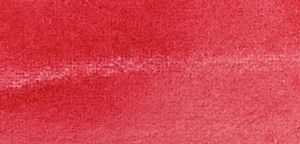 | |||
| Quinacridone Rose (PV19) |  | |||
| Azo or Hansa reds | Azo or Hansa reds | |||
| Madder lake NP9 | 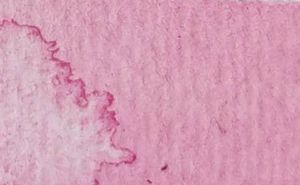 | |||
| Perylene Red PR149 |  | |||
| Pyrrole Orange (PO71) |  | |||
| Pyrrole red (PR254) | 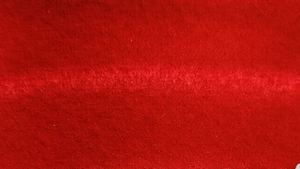 |
Transparency of violet colours
| Transparent | Semi-transparent | Semi-opaque | Opaque | Colour sample |
|---|---|---|---|---|
| Carbazole violet (PV23) |  | |||
| Quinacridone Purple (PV55) |  | |||
| Cobalt violet (PV14) |  | |||
| Potter’s Pink (PR233) |  | |||
| Manganese violet (PV16) |  | |||
| Ultramarine violet (PV15) |  |
Transparency of earth colours
One problem with stating transparency for, for example, Burnt Sienna is that all manufacturers use different pigments and create colors with completely different properties, in other words, it is not possible to say whether Burnt Sienna is transparent or opaque. For this reason, all earth colors, with completely different properties depending on the manufacturer, are excluded from this list.
| Transparent | Semi-transparent | Semi-opaque | Opaque | Colour sample |
|---|---|---|---|---|
| Magnesium Ferrite (PBr11) |  | |||
| Mummy Bauxite (Pbr7) |  | |||
| Perylene Maroon (PR179) |  | |||
| Van Dyke brown (Genuin) (NBr8) |  | |||
| Quinacridone orange (PO48) |  | |||
| Transparent Brown Oxide (PR101) |  | |||
| Transparent red oxide (PR101) |  | |||
| Transparent Yellow Oxide (PY42) |  | |||
| Benzimidazolone Brown (Pbr25) |  | |||
Lemon Ocher (PY43) | |
Transparency of black colours
| Transparent | Semi-transparent | Semi-opaque | Opaque | Colour sample |
|---|---|---|---|---|
| Ivory Black (PBk9) |  | |||
| Graphite Grey (PBk10) |  | |||
| Iron Oxide Black (PBk11) |  | |||
| Vine Black (PBk8) |  | |||
| Lamp Black (PBk6, PBk7) |  |



Tack för en fantastisk blogg. Använder den ofta för all fakta och inspiration som du delar med dig.
That list is real handy. Really though, what is the difference between semi-transparent and semi-opaque? It seems like they must mean, by definition, the same.
You might think that semi-transparent and semi-opaque are the same thing, but it is an established way of describing the transparency of watercolor paints. Semi-transparent is closer to transparent while semi-opaque is closer to opaque. Think of it as a four-step scale: Transparent, semi-transparent, semi-opaque and finally opaque.
ive been attending an Art Club with very experienced artists for 4 years: no one could explain this distinction so clearly much obliged! such critical info