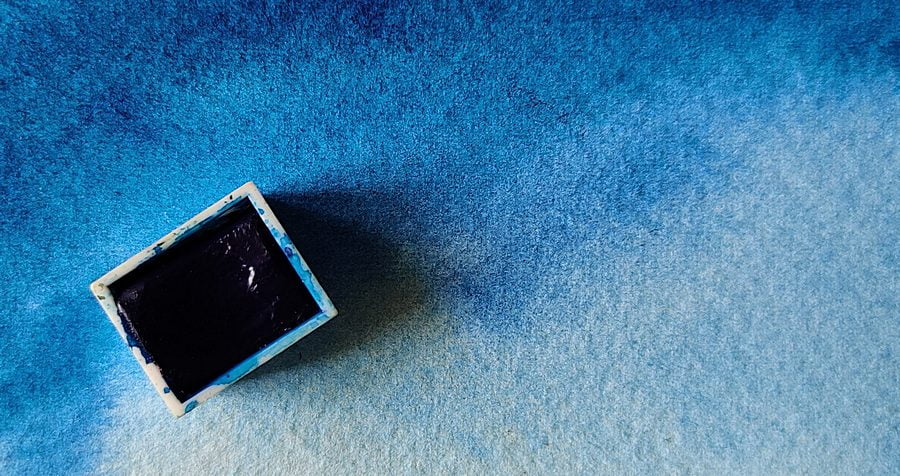
Phthalo blue green shade (PB15:3)
Phthalo blue is available in several variants. The most common are PB15:1 and PB15:3, PB15:1 is warmer than PB15:3 and is often called red shade while PB15:3 which is greenish is often called green…

Phthalo blue is available in several variants. The most common are PB15:1 and PB15:3, PB15:1 is warmer than PB15:3 and is often called red shade while PB15:3 which is greenish is often called green…
This is a very simple exercise for the absolute beginner, sometimes when I get students who do not master basic brush technique and who have difficulty painting with a lot of liquid, they get…
This is a painting that is painted according to the principle from light to dark. It is thus built up with gradually darker and darker layers of color. The exercise also shows how you…
Quinacridone red is something as unusual as a transparent warm red color. The color has very good mixing properties and it is possible to successfully mix it towards both orange and violet. The paint…
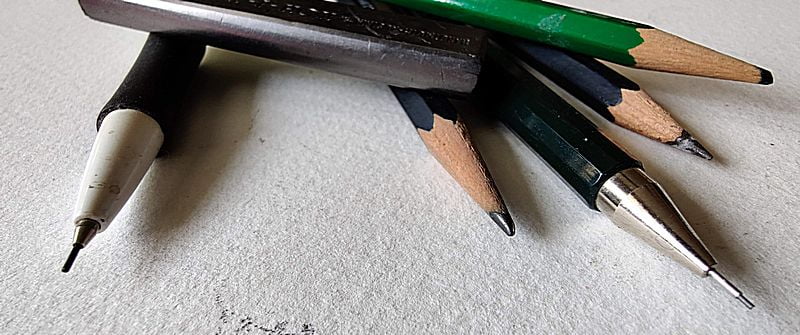
When a new student arrives at my courses, they usually have a pencil with them, at least those who have painted before, those who have not painted do not have a pencil. Pretty much…
Negative Painting is a painting technique, often used in watercolor. In short, it means creating the shape of an object by painting what is behind first, and thus giving an object a shape before…
The dye PB60 was developed by the German chemical company BASF, and came onto the market in 1901, but it was not until the 1950s that it was used as a pigment in artists’…
You can actually use whatever colors you want In this exercise, I myself used Phthalo blue, Burnt sienna, nickel dioxin yellow, Ivory black and cadmium red. It is not the colors that are important…